
Structure
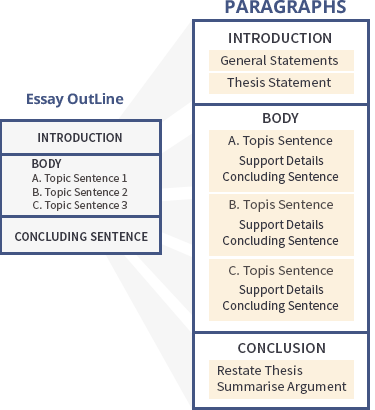
How to Structure a Research Paper
Breaking down the standard sections of an academic paper — from the abstract to the conclusion — with notes on what Canadian institutions expect in each part.
Read article →Practical guidance on essay planning, citation formats, argument building and proofreading — written for students studying at Canadian universities and colleges.
Latest Articles
From the first outline to final proofreading — each article focuses on a specific part of the academic writing process.
Structure
Breaking down the standard sections of an academic paper — from the abstract to the conclusion — with notes on what Canadian institutions expect in each part.
Read article →
Citations
A comparison of APA 7th, MLA 9th and Chicago 17th — which style is used in which discipline, and the formatting rules that trip students up most often.
Read article →
Proofreading
Systematic methods for catching grammar, logic and formatting errors before submitting — including how to use reading aloud, print review and peer editing.
Read article →Key Areas
01
How to move from a broad topic to a focused thesis — with approaches to outlining that keep argument logic clear from the first draft.
02
APA, MLA and Chicago compared side-by-side. Which format applies to which faculty, and how to handle digital and secondary sources correctly.
03
Techniques for constructing a coherent academic argument — integrating evidence, avoiding logical gaps and signposting transitions between sections.
04
Finding and evaluating peer-reviewed sources through databases like ProQuest, JSTOR and university library portals available to Canadian students.
05
Page margins, header/footer conventions, title pages, reference lists and appendix formatting as expected by Canadian academic institutions.
06
Staged review methods that separate content revision from grammar checking — reducing the risk of surface errors masking sound arguments.
Context
Canadian universities — from UBC and McGill to Ryerson and Dalhousie — each publish their own style guidelines for written work. While many rely on APA 7th as a baseline for social sciences and sciences, humanities faculties often require Chicago or MLA, and some professional programs use modified house styles.
The result is that a student studying at the University of Toronto may follow different formatting rules in their psychology course than in their English literature seminar. This site outlines the most common requirements across disciplines and links to authoritative sources for each style.
References throughout this site draw on publicly available documentation from Purdue OWL, the APA Style website and individual university writing centres.
